

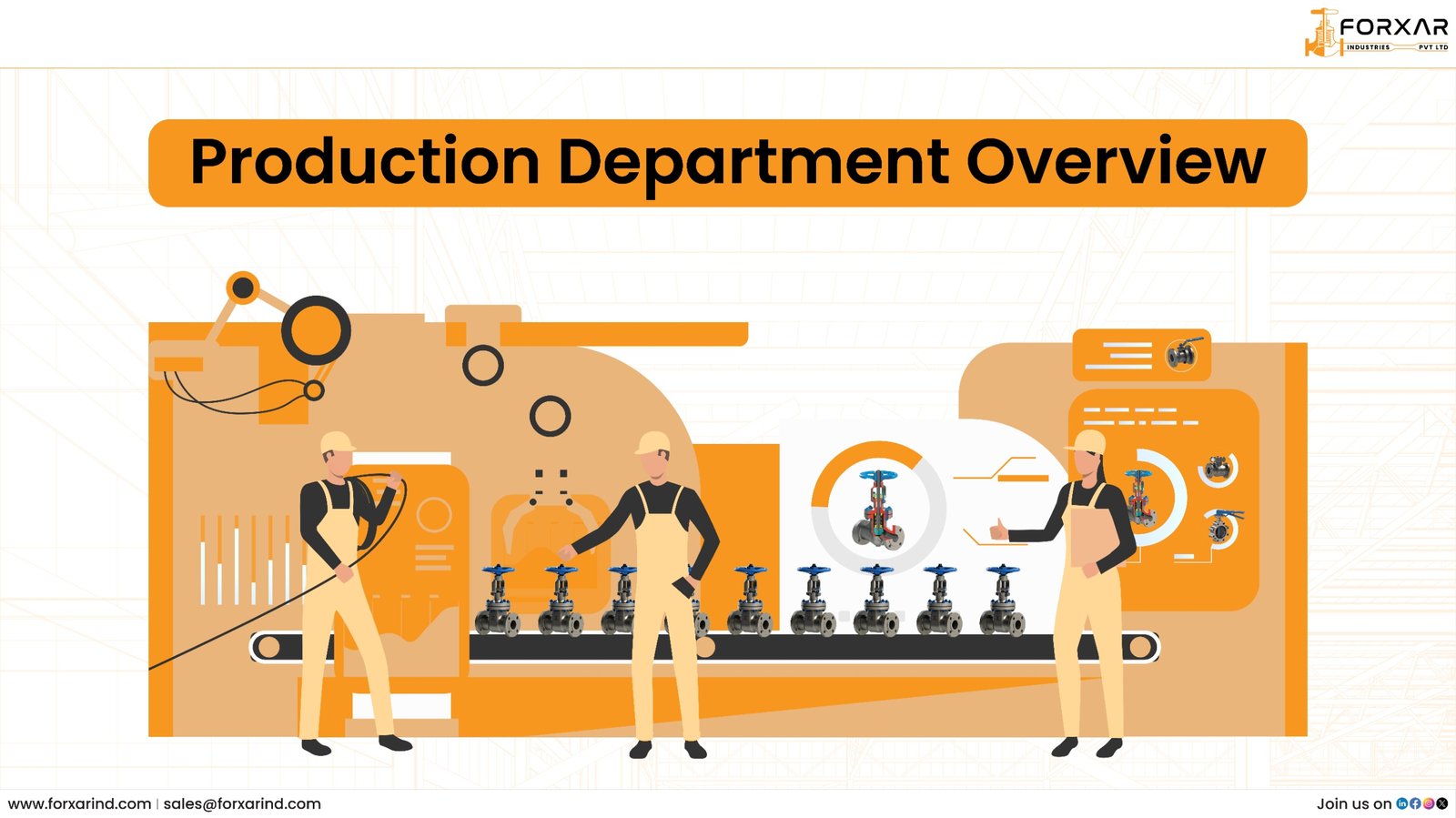
Walk into any factory, studio, manufacturing plant, or large-scale operation, and you’ll find one central engine driving everything forward: the production department.
It’s where planning becomes execution. Where raw materials turn into finished goods. Where deadlines, quality standards, efficiency metrics, and operational strategy meet reality.
Whether you run a manufacturing company, manage operations, or are exploring a career in production management, understanding how a production department functions in 2026 is essential. Let’s break it down clearly and practically.
What Is a Production Department?
A production department is the division within an organization responsible for converting inputs (materials, labor, technology, and capital) into finished products or deliverable services.
In simple terms:
It’s the team that makes things happen.
This department ensures:
- Goods are manufactured on time
- Quality standards are met
- Costs stay within budget
- Equipment runs efficiently
- Supply chain flow remains uninterrupted
In manufacturing environments, it handles production lines, assembly operations, inventory usage, machinery, and workforce scheduling. In media or creative industries, it oversees filming, editing, and output delivery. The core principle is the same: execution with control.
Core Objectives of a Production Department
A modern production department focuses on five major goals:
- Efficiency optimization
- Quality control assurance
- Cost management
- Timely delivery
- Operational safety compliance
Balancing these elements is not easy. Increasing output too aggressively can hurt quality. Cutting costs without planning can disrupt workflow. That’s why structured production management systems are critical.
Organizational Structure of a Production Department
Although structures vary by company size and industry, most production departments follow a hierarchical model.
Typical Structure Includes:
- Production Manager
- Operations Supervisor
- Line Supervisors
- Machine Operators
- Quality Control Inspectors
- Maintenance Technicians
- Inventory Coordinators
Here’s a simplified breakdown:
| Role | Primary Responsibility |
|---|---|
| Production Manager | Oversees entire production operations |
| Operations Supervisor | Manages daily workflow |
| Line Supervisor | Leads specific production lines |
| Machine Operator | Runs equipment and tools |
| Quality Control Staff | Ensures product standards |
| Maintenance Team | Prevents downtime and breakdowns |
In lean manufacturing environments, layers may be flatter to increase agility and communication speed.
Key Functions of the Production Department
Let’s look at the main operational functions.
1. Production Planning
Production planning determines:
- What to produce
- How much to produce
- When to produce it
- Which resources are required
This involves forecasting demand, analyzing inventory levels, and aligning with supply chain management.
Planning tools often include:
- ERP systems
- Production scheduling software
- Capacity planning models
- Demand forecasting analytics
2. Production Scheduling
Scheduling ensures workflow sequencing is efficient.
It defines:
- Shift allocation
- Equipment use timelines
- Batch production cycles
- Maintenance windows
Proper scheduling minimizes idle time and prevents bottlenecks.
3. Quality Assurance and Quality Control
No production department survives without strict quality systems.
Quality functions include:
- Product inspections
- Process monitoring
- Defect analysis
- Compliance audits
- ISO standard adherence
Quality control reduces rework, protects brand reputation, and lowers long-term costs.
4. Inventory and Material Management
Raw materials must arrive on time and in correct quantities. Production teams coordinate closely with procurement and warehouse departments.
This includes:
- Just-in-time inventory
- Stock rotation
- Waste reduction
- Material requirement planning (MRP)
Strong inventory management directly improves profit margins.
5. Equipment and Maintenance Management
Downtime kills productivity.
Modern production departments use:
- Preventive maintenance schedules
- Predictive maintenance sensors
- Asset tracking systems
- Downtime reporting dashboards
This reduces unexpected failures and increases machine lifespan.
Production Department KPIs (Performance Metrics)
To measure performance, companies rely on key performance indicators (KPIs).
Common KPIs include:
- Overall Equipment Effectiveness (OEE)
- Production yield rate
- Cycle time
- Downtime percentage
- Defect rate
- Cost per unit
- On-time delivery rate
Tracking these metrics enables continuous improvement and data-driven decision-making.
Types of Production Systems
Different industries use different production models.
1. Job Production
- Custom, one-off production
- Highly skilled labor
- Flexible processes
Example: Custom furniture manufacturing.
2. Batch Production
- Products made in groups
- Moderate flexibility
- Controlled inventory
Example: Food processing or pharmaceuticals.
3. Mass Production
- High-volume standardized goods
- Automated production lines
- Economies of scale
Example: Automotive manufacturing.
4. Continuous Production
- 24/7 operation
- Highly automated systems
- Minimal variation
Example: Oil refining or chemical processing.
Each model demands different production department strategies.
Technology in Modern Production Departments (2026 Trends)
Production departments today look very different compared to a decade ago.
Key Innovations Include:
- Industrial automation systems
- Robotics integration
- AI-powered demand forecasting
- IoT-enabled machinery
- Real-time production monitoring
- Smart factory ecosystems
- Digital twin simulations
- Cloud-based ERP systems
Industry 4.0 has transformed operational visibility. Managers can now monitor machine efficiency from mobile dashboards in real time.
Moreover, predictive analytics helps prevent delays before they occur.
Challenges Facing Production Departments
Even with technology, production teams face complex pressures.
Common Challenges:
- Supply chain disruptions
- Skilled labor shortages
- Rising material costs
- Sustainability demands
- Regulatory compliance
- Production scaling issues
- Equipment downtime risks
Balancing speed and quality remains a constant tension.
How Production Departments Improve Efficiency
High-performing production departments rely on structured methodologies.
Popular Operational Strategies:
- Lean manufacturing
- Six Sigma
- Kaizen continuous improvement
- Total Quality Management (TQM)
- Just-in-Time (JIT) systems
- Agile production planning
These approaches reduce waste, improve output consistency, and increase operational reliability.
Production Department vs Operations Department
People often confuse the two.
Here’s the difference:
| Production Department | Operations Department |
|---|---|
| Focuses on manufacturing goods | Oversees entire business processes |
| Handles raw material conversion | Includes logistics, HR, and supply chain |
| Directly tied to factory floor | Broader strategic oversight |
Production is a subset of operations — but a very critical one.
Skills Required in a Production Department
If you’re building a career in production management or operations supervision, these skills matter most:
- Process optimization
- Data analysis
- Leadership and team coordination
- Equipment troubleshooting
- Quality management systems
- Budget control
- Risk assessment
- Communication under pressure
Soft skills are equally important. Production environments move fast, and calm decision-making under deadlines is essential.
Sustainability and Green Production
In 2026, sustainability is no longer optional.
Modern production departments implement:
- Waste minimization systems
- Energy-efficient equipment
- Carbon footprint tracking
- Sustainable sourcing policies
- Recycling programs
- Environmental compliance monitoring
Green production practices improve both public perception and long-term profitability.
Why the Production Department Is the Backbone of Business
Without production, strategy means nothing.
Sales can generate demand. Marketing can build brand visibility. But if the production department fails to deliver consistent quality on time, the entire organization suffers.
It is:
- The execution engine
- The cost center to optimize
- The quality gatekeeper
- The revenue enabler
Strong production systems lead to:
- Higher customer satisfaction
- Lower operational waste
- Stronger competitive advantage
- Predictable growth
Final Thoughts
The production department is far more than a factory floor operation. It is a structured, data-driven, performance-focused ecosystem that turns ideas into deliverables.
In 2026, successful production departments blend:
- Strategic planning
- Advanced technology
- Skilled workforce management
- Quality control systems
- Continuous improvement frameworks
If you’re managing or building one, focus on efficiency, measurement, innovation, and accountability.
And if you’re entering the field, invest in technical knowledge, process thinking, and leadership skills.
