








Artificial intelligence is no longer a future concept for businesses; it is actively reshaping how organisations hire talent, develop skills, and collaborate with technology. According to Palantir CEO Alex Karp, the integration of AI into business operations is forcing leaders to rethink long-standing assumptions about education, aptitude, and workforce readiness https://techcee.co.uk/. As AI systems take on increasingly complex cognitive tasks, the traditional pathways to employment and success are being questioned.
Karp argues that the way organisations identify and deploy talent must evolve alongside technology. In his view, AI is not just changing job roles—it is changing the very definition of what makes someone valuable in the modern workforce. This shift challenges conventional hiring practices and raises important questions about which skills truly matter in an AI-driven world.
AI’s Growing Influence on Talent and Skills

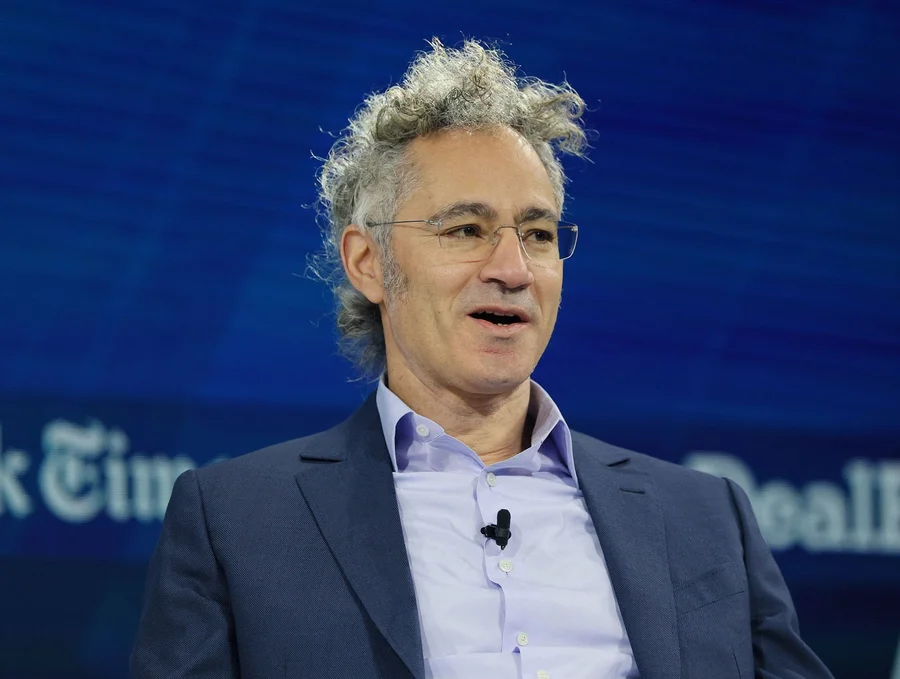
As AI becomes more capable of analysing data, recognising patterns, and generating insights, many roles that once relied heavily on human cognitive effort are changing. Tasks such as research, forecasting, and even decision support can now be assisted or partially automated by intelligent systems. This has led organisations to reconsider how they build teams and what skills they prioritise.
Alex Karp has suggested that traditional humanities-based education may become “hard to market” in a world where AI can perform many intellectual tasks once associated with high-level thinking. While this view has sparked debate, it reflects a broader concern across industries: how do organisations differentiate human value when machines can handle so much of the analytical workload?
Rather than dismissing human skills altogether, leaders are increasingly focused on identifying capabilities that complement AI. These include critical thinking, judgment, adaptability, ethical reasoning, and the ability to apply knowledge in real-world contexts. The challenge lies in recognising and measuring these qualities during the hiring process.
Palantir’s Unconventional Hiring Philosophy
Palantir has positioned itself at the forefront of this workforce transformation by adopting unconventional hiring practices. Instead of relying solely on academic credentials or traditional career paths, the company has experimented with alternative ways to identify talent with high potential.
In 2025, Palantir launched its Meritocracy Fellowship, a paid engineering programme designed to recruit high school graduates. What makes the programme unique is its emphasis on studying philosophy and history before participants move on to working on real-world projects. This approach reflects Palantir’s belief that raw aptitude and intellectual curiosity matter more than formal qualifications alone.
On its website, Palantir describes the initiative as a way “to cultivate exceptional talent, increasingly overlooked, regardless of background.” The company emphasises agency, responsibility, and challenge over rigid curricula or credentials. By doing so, Palantir aims to surface individuals who might otherwise be filtered out by conventional hiring systems.
This model highlights a growing trend in the techcee sector: prioritising demonstrated ability and potential over pedigree. In an AI-driven environment, where learning curves are steep and roles evolve quickly, adaptability and problem-solving often outweigh static knowledge.
Alex Karp’s Personal Perspective on Education and Work
Alex Karp’s views on hiring and skills are deeply influenced by his own experience. After completing a PhD in philosophy, he struggled to find employment and recalls questioning who would give him his first job. This experience shaped his scepticism toward traditional education systems that promise career security but often fail to deliver practical opportunities.
In a November 2025 interview with Axios, Karp shared his blunt assessment of modern career pathways. He argued that individuals with high intelligence and generalised knowledge, but without specific, marketable skills, may struggle in today’s job market. His remarks sparked discussion, particularly his suggestion that for many people, attending the cheapest possible school and focusing on real-world experience may be a smarter path.
These comments reflect a broader reality: degrees alone no longer guarantee employment. As AI reshapes job requirements, organisations are increasingly looking for people who can apply knowledge, learn quickly, and operate effectively alongside advanced technology.
Rethinking How Aptitude Is Measured
At the World Economic Forum in Davos, Karp expanded on the idea that the modern workforce requires “different ways of testing aptitude.” Traditional methods, such as standardised tests and academic rankings, often fail to capture the full range of an individual’s capabilities.
He noted that past systems of evaluation may not have fully revealed how irreplaceable certain talents are. In an AI-augmented workplace, qualities like creativity, resilience, ethical judgment, and the ability to navigate ambiguity become increasingly important. These traits are difficult to measure through exams or resumes alone.
As a result, many organisations are experimenting with new assessment methods. Project-based evaluations, real-world problem-solving exercises, and scenario-based challenges are becoming more common. These approaches aim to test how candidates think, adapt, and collaborate, rather than simply what they know.
This shift aligns with the rise of skills-based hiring, where demonstrated competence takes precedence over formal credentials. In an environment where AI can rapidly fill knowledge gaps, the ability to learn and apply skills effectively becomes a key differentiator.
Identifying Human Value in an AI-Augmented Workplace
One of the biggest challenges for technology leaders is determining which human capabilities remain essential as AI systems grow more sophisticated. When machines can process information at scale, organisations must focus on areas where human judgment and creativity still add unique value.
Rather than competing with AI, successful workers will increasingly complement it. This includes framing the right questions, interpreting outputs in context, and making decisions that account for ethical, social, and strategic considerations. Human insight, particularly in complex or ambiguous situations, remains difficult to replicate with technology alone.
Recognising these qualities requires a fundamental shift in hiring philosophy. Instead of filtering candidates based on narrow criteria, organisations need more flexible and inclusive approaches that surface diverse forms of talent.
Transparency as a Key to Workforce Transition
The human side of AI adoption is just as important as the technical side. Doug McMillon, CEO of Walmart, highlighted this during a September 2025 press conference, where he emphasised the need for transparency when introducing AI into the workplace.
McMillon explained that organisations must communicate openly about what they are learning, what changes are being made, and why those changes matter. He also acknowledged that AI is likely to change every job in some way, underscoring the scale of the transformation ahead.
This transparent approach helps build trust and reduces uncertainty among employees. When workers understand how AI will affect their roles, they are better positioned to adapt and develop relevant skills. Without clear communication, organisations risk resistance, confusion, and disengagement.
Preparing for the Future of Work
As AI continues to evolve, organisations across industries are testing new models for human-AI collaboration. From Palantir’s merit-based hiring experiments to Walmart’s focus on transparency, there is no single blueprint for success. However, common themes are emerging.
Skills-based hiring, alternative aptitude assessments, and open communication are becoming central strategies. These approaches recognise that the future of work depends not just on technology, but on how humans learn, adapt, and contribute alongside it.
For workers, this means focusing less on credentials and more on developing transferable skills, practical experience, and the ability to work with intelligent systems. For employers, it means rethinking long-held assumptions about talent and creating environments where diverse capabilities can thrive.
Conclusion
The question of how AI is reshaping workforce skills and hiring does not have a simple answer. What is clear, however, is that traditional models are no longer sufficient. Leaders like Alex Karp are challenging organisations to look beyond degrees and titles and to focus instead on aptitude, adaptability, and real-world impact.
As AI continues to transform business operations, the organisations that succeed will be those that invest in people as much as technology. By redefining how talent is identified, developed, and supported, companies can build workforces that are not only AI-ready, but resilient in the face of constant change.


