







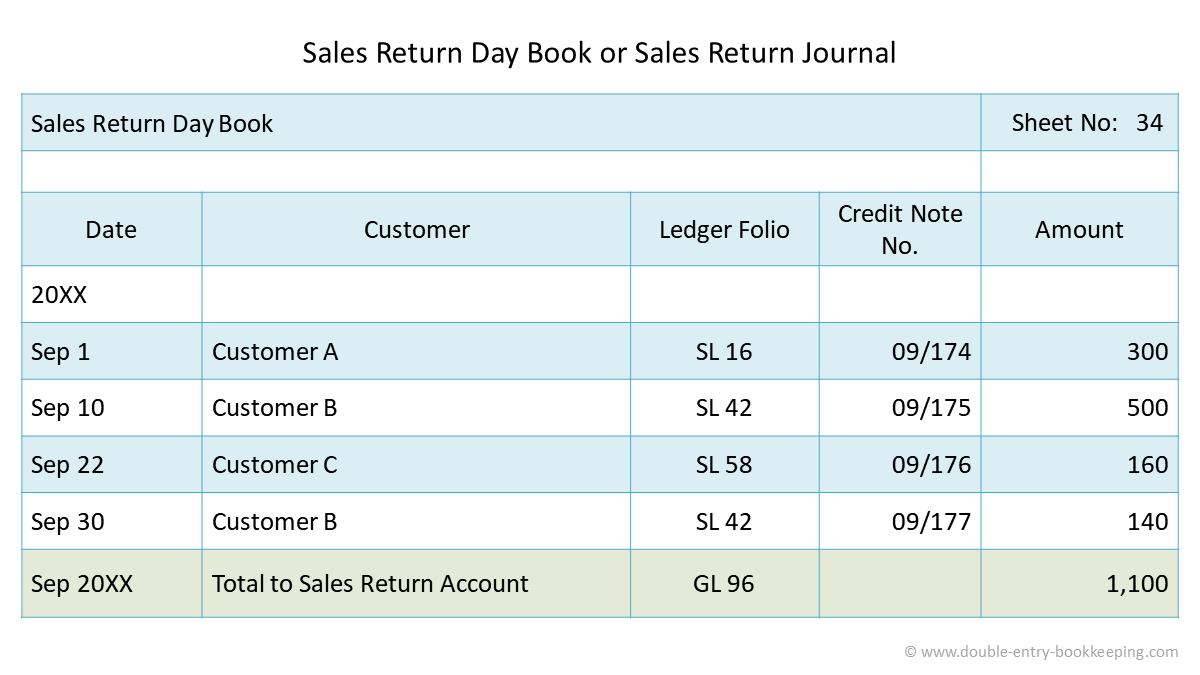
If you’ve ever worked in accounting or handled business books, you know that sales don’t always stick. Customers return goods. Products get damaged. Orders are canceled. And when that happens, the sales return journal entry becomes essential.
Understanding how to record a sales return correctly is critical for accurate financial statements, revenue reporting, and inventory management. A small mistake here can distort net sales, profit margins, and tax calculations.
Let’s break this down clearly, practically, and step by step.
What Is a Sales Return?
A sales return occurs when a customer sends back goods previously purchased. This could happen because:
- The product was defective
- The wrong item was delivered
- Goods were damaged during shipping
- The customer changed their mind (within return policy)
From an accounting perspective, a sales return reduces revenue. That’s why it must be recorded properly using a reversing journal entry.
What Is a Sales Return Journal Entry?
A sales return journal entry records the reversal of a previously recognized sale.
It does two things:
- Reduces revenue
- Adjusts accounts receivable or cash
Additionally, if inventory is involved, it may also adjust cost of goods sold (COGS) and inventory.
Basic Sales Return Journal Entry (Credit Sale)
Let’s start with the most common scenario.
Scenario:
A company sold goods worth $1,000 on credit. Later, the customer returns the goods.
Journal Entry:
| Account | Debit | Credit |
|---|---|---|
| Sales Returns | 1,000 | |
| Accounts Receivable | 1,000 |
Explanation:
- Sales Returns (Debit): This reduces total revenue.
- Accounts Receivable (Credit): Reduces the amount owed by the customer.
Sales Returns is a contra-revenue account. It offsets gross sales to calculate net sales.
Sales Return Journal Entry (Cash Sale)


If the original sale was made in cash, the entry changes slightly.
Scenario:
Goods sold for $1,000 cash are returned.
Journal Entry:
| Account | Debit | Credit |
|---|---|---|
| Sales Returns | 1,000 | |
| Cash | 1,000 |
Here, the business refunds the cash directly.
Inventory Adjustment Entry (Important Step)
If goods are returned and they are still usable, you must adjust inventory as well.
Assume:
- Original sale price = $1,000
- Cost of goods sold (COGS) = $600
Inventory Reversal Entry:
| Account | Debit | Credit |
|---|---|---|
| Inventory | 600 | |
| Cost of Goods Sold | 600 |
This restores the inventory and reduces COGS.
Many beginners forget this second entry — which leads to incorrect gross profit calculations.
Sales Return with GST or VAT
If tax was charged on the original sale, it must also be reversed.
Example:
Sale = $1,000
GST (10%) = $100
Total invoice = $1,100
Journal Entry:
| Account | Debit | Credit |
|---|---|---|
| Sales Returns | 1,000 | |
| GST Payable | 100 | |
| Accounts Receivable | 1,100 |
This ensures tax liability is adjusted properly.
Always confirm whether your jurisdiction requires separate GST/VAT reversal documentation.
Why Sales Returns Matter in Financial Reporting
Sales returns directly impact:
- Net sales
- Gross profit
- Revenue recognition
- Income statement accuracy
- Tax reporting
Net Sales Formula:
Net Sales = Gross Sales – Sales Returns – Sales Allowances – Discounts
If returns are not recorded properly, revenue will appear inflated.
That can mislead management and distort financial analysis.
Sales Return vs Sales Allowance
These two are often confused.
| Sales Return | Sales Allowance |
|---|---|
| Goods are physically returned | Customer keeps goods |
| Revenue fully reversed | Partial price reduction |
| Inventory adjusted | Inventory not affected |
Both reduce revenue but are recorded differently.
Accounting Cycle Impact
The sales return journal entry affects multiple parts of the accounting cycle:
- General journal
- Ledger accounts
- Trial balance
- Income statement
- Balance sheet
Proper posting ensures clean audit trails and accurate reconciliation.
Common Mistakes in Recording Sales Returns
Even experienced accountants make errors.
Here are common issues:
- Forgetting inventory adjustment
- Posting to Sales instead of Sales Returns
- Ignoring tax reversal
- Recording wrong amounts
- Misclassifying as expense
Accuracy in debit and credit entries is critical.
Example: Full Sales Return Entry (Complete Case Study)
Let’s walk through a complete example.
A company sells goods:
- Selling price = $2,000
- Cost = $1,200
- GST (10%) = $200
- Total invoice = $2,200
Customer returns goods later.
Step 1: Reverse Revenue
| Account | Debit | Credit |
|---|---|---|
| Sales Returns | 2,000 | |
| GST Payable | 200 | |
| Accounts Receivable | 2,200 |
Step 2: Reverse Cost
| Account | Debit | Credit |
|---|---|---|
| Inventory | 1,200 | |
| Cost of Goods Sold | 1,200 |
Now revenue, tax liability, and inventory are fully corrected.
Impact on Financial Statements
After posting a sales return journal entry:
Income Statement:
- Revenue decreases
- COGS decreases
- Gross profit adjusts
Balance Sheet:
- Accounts receivable decreases
- Inventory increases
- GST payable reduces
This ensures financial transparency.
How Sales Returns Affect Business Performance
High sales returns may indicate:
- Poor product quality
- Weak packaging
- Inaccurate product descriptions
- Logistics issues
- Customer dissatisfaction
Monitoring the sales return rate is important for operational improvement.
Sales Return Rate Formula:
Sales Return Rate = (Sales Returns / Total Sales) × 100
A high percentage signals the need for quality control review.
Digital Accounting Software and Sales Returns
Modern accounting software automates the sales return journal entry process.
Popular systems include:
- QuickBooks
- Xero
- SAP
- Oracle NetSuite
These platforms automatically:
- Generate credit notes
- Reverse GST
- Update inventory
- Adjust receivables
Automation reduces human error.
Sales Return Journal Entry in Perpetual vs Periodic Systems
Perpetual Inventory System:
- Inventory updated immediately
- COGS reversed instantly
Periodic Inventory System:
- Inventory adjusted at period-end
- COGS recalculated after physical count
Most modern businesses use perpetual systems.
Internal Controls for Sales Returns
To prevent fraud and accounting errors:
- Require approved return authorization
- Issue credit notes
- Inspect returned goods
- Segregate duties
- Maintain documentation
Strong internal controls protect revenue integrity.
Final Thoughts
The sales return journal entry is more than just reversing a transaction. It protects financial accuracy, ensures proper tax reporting, and maintains reliable profit calculations.
Whether dealing with credit sales, cash refunds, GST adjustments, or inventory reversals, the key is understanding:
- Which accounts to debit
- Which accounts to credit
- When to adjust COGS
- How it impacts net sales
Accurate sales return recording strengthens financial statements and supports better business decisions.


