



If your social media feeds have suddenly filled with old selfies, throwback outfits, and heavily filtered photos, you’re not alone. A viral social media trend has people scrolling deep into their camera rolls, searching for pictures that best capture what their lives looked like a decade ago. The trend, commonly referred to as “2026 is the new techcee 2016,” has taken over platforms like TikTok, Instagram, and Snapchat, sparking a wave of nostalgia that feels both personal and collective.
From everyday users to celebrities, people are revisiting a time many consider simpler, more carefree, and full of iconic pop culture moments. Snapchat filters, chokers, bold makeup, and saturated photos are making a comeback—at least digitally. While 2016 never actually left the internet, this trend has given it new life, encouraging users to reflect on where they were then and how much has changed since.
A Look Back at a Nostalgic Year
The renewed interest in 2016 didn’t happen overnight. Weeks before the trend gained momentum, social media users were already reminiscing about that year, sharing memes and videos recalling what made it so memorable. For many, 2016 represents a cultural high point filled with viral moments, unforgettable music, and trends that defined a generation.
That year brought us the Mannequin Challenge, chart-topping hits, and Broadway’s cultural phenomenon “Hamilton.” Even the bizarre moments—like the creepy clown sightings that spread fear and fascination—have become part of internet lore. These shared memories created a strong emotional connection, making 2016 an easy target for nostalgia-driven content.
As people prepare to enter a new phase of their lives in 2026, revisiting photos from 10 years ago feels symbolic. It’s not just about the aesthetics; it’s about remembering who they were, what mattered to them, and how the world felt at the time.

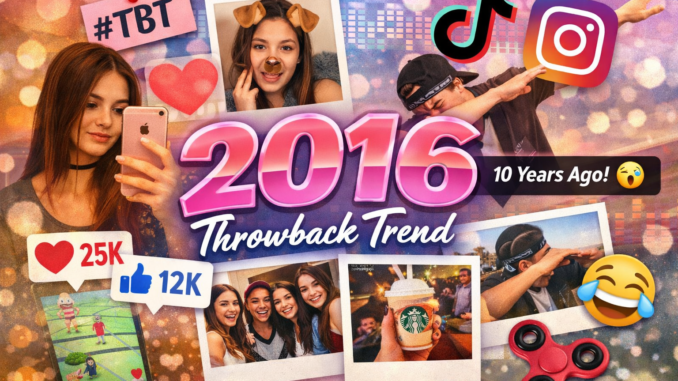
What is the “2026 is the new 2016” trend?
At its core, the “2026 is the new 2016” trend is simple. People choose photos of themselves from 2016 and post them online for friends and followers to see. These posts often include captions reflecting on that year or highlighting major moments happening in their lives at the time.
Some users talk about being in high school or college, while others share memories of friendships, relationships, or personal milestones. The trend allows people to tell a story—one that connects their past selves to who they are today. For many, it’s a reminder of growth, change, and how quickly time passes.
Music plays a huge role in these posts. Many creators pair their throwback photos with popular songs from 2016, instantly transporting viewers back to that era. Tracks like The Chainsmokers and Halsey’s “Closer,” DRAM and Lil Yachty’s “Broccoli,” and Jon Bellion’s “All Time Low” frequently appear, reinforcing the emotional pull of the trend.
The Visual Style That Defined 2016
Beyond music, the visuals in these posts are unmistakably tied to the mid-2010s. The photos often showcase the signature aesthetics of the time: thick, shiny makeup, bold eyebrows, pencil skirts paired with boots, and outfits heavily influenced by early Instagram fashion.
Filters play a major role as well. Popular Snapchat filters from 2016—such as flower crowns, dog ears, and exaggerated face effects—have resurfaced. These filters didn’t just enhance photos; they defined an entire era of social media expression. Seeing them again feels familiar, almost comforting, for users who grew up using them daily.
The heavy saturation and dramatic edits common in 2016 photography also stand out compared to today’s more minimal, natural aesthetic. This contrast highlights how trends evolve and why looking back can feel so striking.
Nostalgia Was Already Building
Long before people began posting their own photos from 2016, nostalgia for the year had been steadily growing. TikTok, in particular, has been filled with videos hoping that 2016’s vibes, memes, and culture would return. Users shared clips labeled with captions like “Wake up it’s 2016,” “Happy 2016,” or “It’s officially 2016,” often paired with old music and screenshots from that time.
As 2026 approached, these nostalgic posts gained even more traction. The idea that “2026 is the new 2016” became a playful way to cope with the passage of time and the changes that came with it. In a world shaped by rapid technological shifts and global events, revisiting a familiar year offers a sense of stability and shared experience.
Celebrities Join the Trend
Celebrities and artists have also embraced the trend, further fueling its popularity. Many took to Instagram to share their favorite photos from a decade ago, giving fans a glimpse into their lives before fame or during their early careers.
Singer-songwriter Khalid, for example, posted a series of throwback photos from 2016 with the caption “2016. 📍.” The images show him graduating high school, attending sporting events with friends, and posing for photoshoots. The post is paired with his hit song “Location” from his debut album American Teen, which was released in early 2017. For fans, the post feels authentic and personal, highlighting how far he’s come.
Other celebrities have participated in different ways. Charlie Puth joined the trend without posting old photos, instead sharing a video using a filter while lip-syncing to his 2016 hit “We Don’t Talk Anymore” with Selena Gomez. His approach shows how the trend isn’t limited to photos—it’s about reconnecting with the sounds, styles, and feelings of that year.
Why the Trend Resonates So Strongly
The popularity of the “2026 is the new 2016” trend reflects a deeper desire for connection and reflection. Many people associate 2016 with a time before major global disruptions, when social media felt more playful and less polished. Revisiting that era offers a brief escape from the pressures of the present.
Posting old photos also allows users to reclaim their digital history. Instead of scrolling past memories quietly, they’re choosing to share them https://techcee.co.uk/, turning personal nostalgia into a collective experience. Friends comment on each other’s posts, reminisce together, and compare how much has changed—or stayed the same.
More Than Just a Trend
While it may look like a simple throwback challenge, this trend highlights how social media continues to shape how people remember the past. By blending personal stories, music, fashion, and shared cultural moments, the “2026 is the new 2016” trend turns nostalgia into a powerful form of expression.
As users continue to post their favorite memories from a decade ago, the trend shows no signs of slowing down. Whether it’s for fun, reflection, or emotional connection, revisiting 2016 has become a way for people to pause, look back, and appreciate the journey that brought them to where they are today.


